
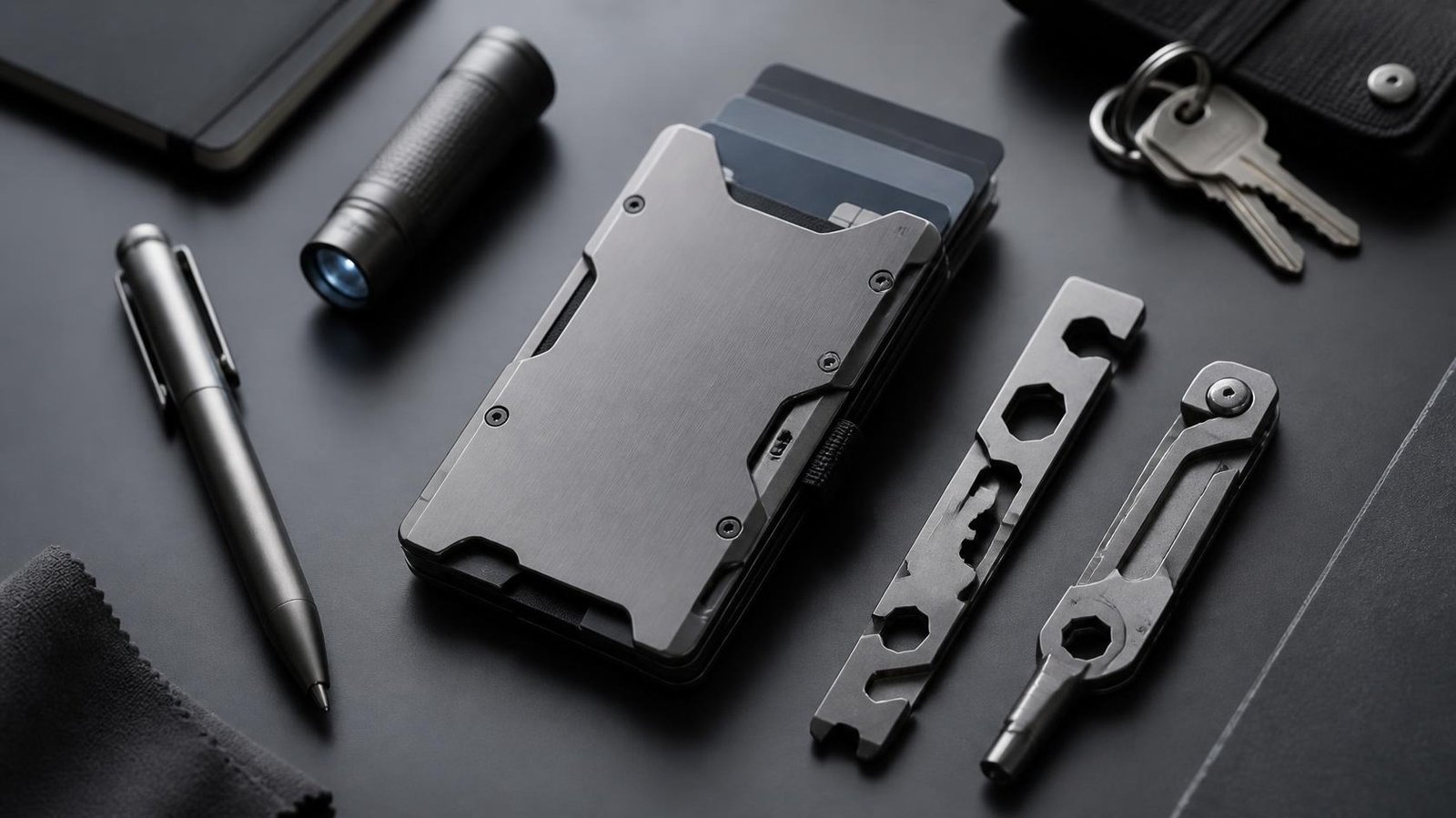
If you want to carry your everyday essentials without stuffing your pockets, a Titanium EDC wallet with RFID cardholder and multi-tools can be a practical solution. It combines the basic function of a wallet with the durability of titanium, RFID protection, and useful everyday tools in one compact design.
But is a titanium EDC wallet actually worth carrying? What features should you look for, and how does it compare with a traditional wallet?
This practical guide explains everything you need to know before choosing one.
What Is a Titanium EDC Wallet?
A titanium EDC wallet is a compact everyday-carry wallet designed to hold essential cards and, depending on the model, cash and small tools. EDC stands for “everyday carry,” referring to items people regularly carry for daily tasks.
Titanium is commonly used in EDC products because it is lightweight, strong, and resistant to corrosion. Instead of carrying a bulky leather wallet plus separate tools, an EDC wallet can combine several functions into one streamlined accessory.
A typical titanium EDC wallet may include:
- Card storage
- RFID-blocking protection
- Cash clip or money band
- Bottle opener
- Screwdriver functions
- Wrench-style cutouts
- Keychain attachment
- Other compact utility features
The exact features vary by manufacturer, so it is important to check the specifications before purchasing.
Why Choose Titanium for an EDC Wallet?
The material is one of the biggest reasons people choose titanium EDC wallets.
Lightweight and Strong
Titanium has an excellent strength-to-weight ratio. A well-designed titanium wallet can provide a sturdy card holder without adding unnecessary bulk.
This can be particularly useful if you prefer a minimalist setup and only carry a few essential cards.
Corrosion Resistant
Titanium is highly resistant to corrosion. For an everyday-carry product that may be exposed to sweat, moisture, and changing weather conditions, this can be a useful advantage.
Long-Term Durability
Unlike some softer wallet materials, titanium is resistant to everyday wear. It can still develop scratches and surface marks, but these are often considered part of the character of a metal EDC product.
What Is an RFID Cardholder?
RFID stands for Radio Frequency Identification. Some payment cards and identification cards use RFID or similar contactless technologies to communicate wirelessly with compatible readers.
An RFID-blocking wallet is designed to reduce the ability of certain radio-frequency readers to communicate with cards while they are stored inside the wallet.
A titanium EDC wallet advertised as an RFID cardholder may therefore provide an additional layer of protection for compatible cards.
However, RFID protection should not be treated as a replacement for normal card-security habits. Keep your cards secure, monitor account activity, and follow the security recommendations provided by your bank or card issuer.
Key Features to Look For
Not every titanium EDC wallet offers the same combination of features. Before buying one, consider the following factors.
1. Card Capacity
Start with the number of cards you normally carry.
A minimalist wallet may be designed for only a handful of cards, while other models provide more capacity. Avoid choosing a wallet based only on its maximum advertised capacity. Cards with embossed numbers, identification cards, and thicker materials can affect how many cards fit comfortably.
2. RFID Protection
If RFID blocking is important to you, verify that the specific wallet is designed to provide it. Look for clear product specifications rather than assuming every metal wallet automatically provides complete RFID protection.
3. Multi-Tool Functions
The multi-tool element can make an EDC wallet more versatile.
Depending on the design, tools may include functions such as:
- Screwdriver edges
- Hex-wrench openings
- Bottle opener
- Ruler
- Box-opening edge
- Pry-style utility feature
- Key-ring attachment
Only use a tool for its intended purpose and follow applicable laws and safety requirements.
4. Cash Carrying
Some minimalist wallets focus entirely on cards, while others include a money clip, elastic strap, or cash compartment.
If you regularly carry paper currency, check how the wallet secures cash before buying.
5. Size and Weight
The purpose of an EDC wallet is convenience. A wallet with too many tools can become bulky and defeat the point of minimalist everyday carry.
Compare the wallet’s dimensions and weight with your current wallet before making a decision.
6. Construction and Finish
Look at how the wallet is assembled. Screws, elastic components,